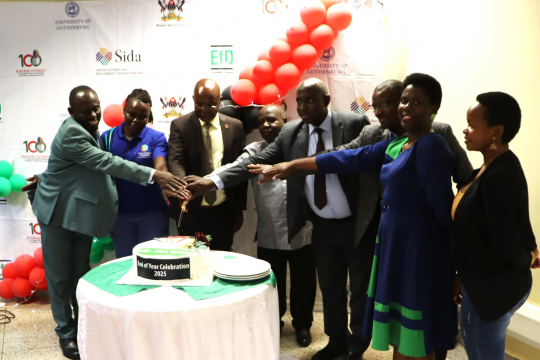
The Environment for Development (EfD) Uganda center at Makerere University has reviewed its key achievements for 2025 and unveiled a five-year strategic plan focusing on energy transition, climate change, and sustainable natural resource management.
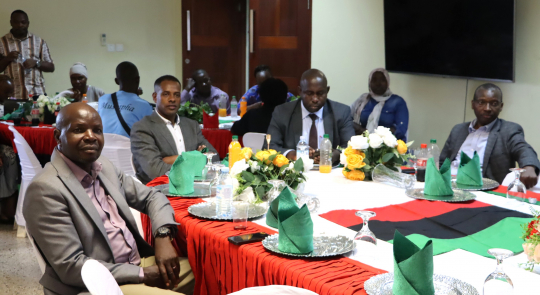
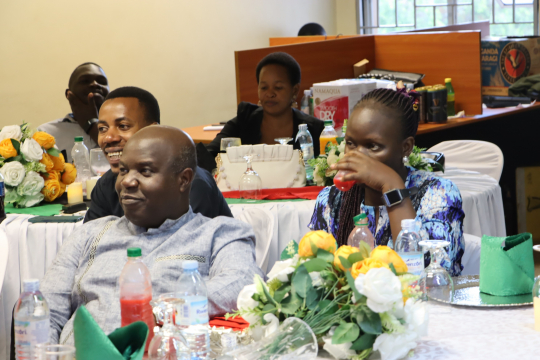
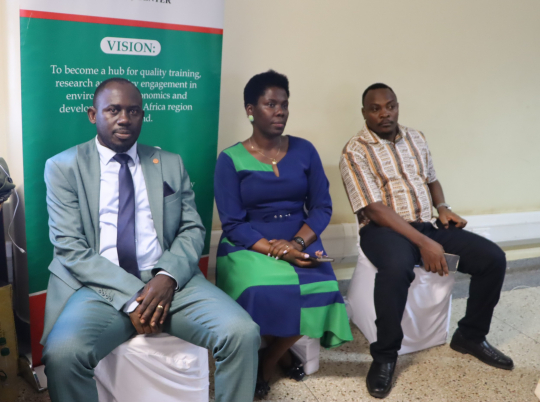
The update was delivered during the center’s annual end-of-year reflection meeting attended by government officials, academics, private sector actors, civil society representatives, researchers, and students.
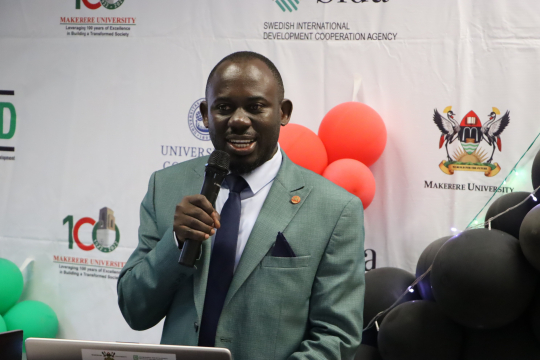
The center has, according to EfD Uganda Director Prof. Edward Bbaale, registered progress in research, policy engagement, and capacity building despite operational challenges.
“The experiences of 2025 have given us important lessons that will guide our work as we implement the 2025–2029 strategic plan,” he said.
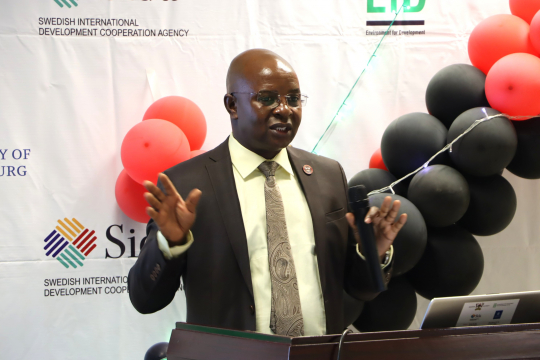
Bbaale highlighted the center’s interdisciplinary positioning within Makerere University, jointly anchored in the School of Economics and the School of Agricultural Sciences.
“This structure allows us to address complex issues such as climate change, energy transition, water resources, forestry, biodiversity, and agriculture in a holistic way,” he noted.
Under the new strategic plan, EfD Uganda will focus on six thematic areas: energy transition; climate change adaptation and mitigation; climate-smart agriculture; water resources management; forestry and biodiversity; and environmental quality. Climate change will remain a cross-cutting issue across all interventions.
Reviewing achievements for 2025, Edward Bbaale said the center organized high-level policy dialogues on climate-smart agriculture and e-mobility under the Inclusive Green Economy program.
“We chose e-mobility because it is a green way of having transport in the country,” he said, adding that the program also supported peer learning among Ethiopia, Tanzania, Kenya, Rwanda, and Uganda.
A major milestone was the development of a natural capital accounting model, supported by GIZ and now adopted by the Ministry of Water and Environment.
“This model is for natural capital policy assessment. It looks at different scenarios and answers key policy questions,” he said.
“For example, what does a country gain by investing in natural capital assets compared to a country that does not invest?”
He added that the Excel-based Model for Natural Capital Policy Assessment (MONCAP) model was developed in collaboration with the Ministry of Finance, Uganda Bureau of Statistics, and the National Planning Authority.
“We are very proud that we managed to collaborate with key government entities and have this model come out. It really puts us at another level,” he said.

The center also expanded capacity building through more than ten training sessions for researchers, policymakers, and graduate students, and recruited a funded postdoctoral fellow to strengthen research on natural capital.
“Postdoctoral fellows are the ones who push the frontiers of new knowledge.”
EfD Uganda also launched five new projects in 2025, including Sida-funded initiatives, a GIZ consultancy, MakRIF-supported research, and grants from the Carnegie Corporation. Professor Bbaale said the center will continue to strengthen partnerships and deliver policy-relevant research to support Uganda’s transition to a sustainable and climate-resilient economy.
By Jane Anyango