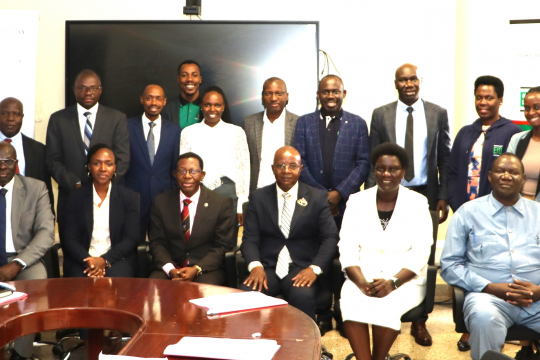
KAMPALA, Uganda | July 16, 2025 — The Environment for Development Initiative–Makerere University Centre (EfD-Mak) convened its 2nd Advisory Board Meeting at Makerere University, where Director Edward Bbaale outlined the Centre’s achievements, challenges, and future direction. Board members called for greater inclusivity, expanded engagement, and sustainable funding to ensure long-term success.
Bbaale reported significant progress since the Centre’s inception in 2019, noting achievements in policy engagement, research output, and capacity building. “Our journey began with Makerere's admission into the EfD network in Vietnam. Since then, we’ve focused on promoting inclusive growth and environmental sustainability,” he said.
Chaired by Prof. Buyinza Mukadasi, Makerere’s Academic Registrar and Acting Deputy Vice Chancellor (Academic Affairs), the meeting introduced new Deputy Director Dr. Alice Turinawe, succeeding Prof. Johnny Mugisha.
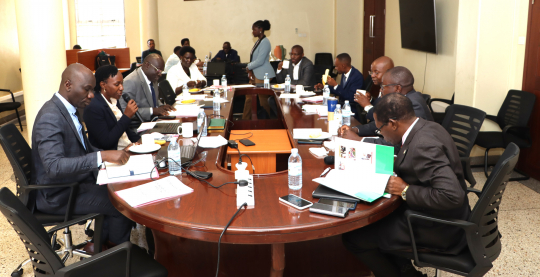
Bbaale highlighted collaborations with National Environment Management Authority, the National Planning Authority, and the Ministry of Finance, and reported over 150 research publications. Current projects span forestry, climate finance, and sustainable agriculture, engaging researchers across Makerere’s Colleges of Business and Agricultural Sciences.
A new Master’s program in Economic Investment Modeling was launched to integrate climate and natural capital into macroeconomic planning. “This program is crucial as the world seeks tools to measure climate impacts,” said Bbaale.
The Centre has intensified policy outreach through training for government officials and dialogues on environmental valuation, energy transitions, and macroeconomic modeling. Funded by SIDA, the Inclusive Green Economy (IGE) program has trained senior policymakers on green transition strategies.
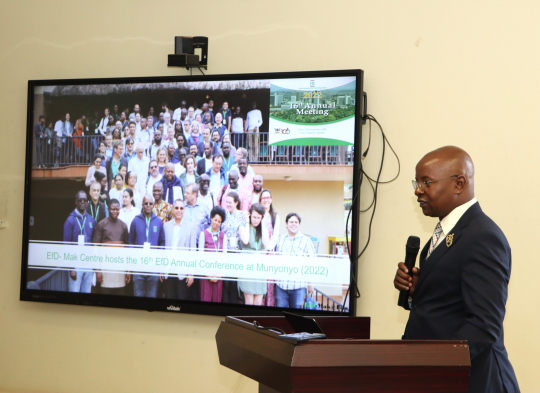
EfD-Mak also contributed to Uganda’s National Development Plan IV, particularly in clean cooking and e-mobility. “We were recognized as a global runner-up for policy influence on clean cooking,” Bbaale noted.
Bbaale said, center fellows had attracted funding from government and other sources to avoid over-reliance on Sida the Centre’s primary funder. For 2025, priorities include climate-smart agriculture, local government engagement, and new grants for environmental valuation and climate resilience modeling.
Prof. Bbaale concluded with a quote from Pope Francis: “God always forgives. Men sometimes forgive. But nature never forgives.”
Stronger SDG Alignment and Inclusivity Urged
Board Chair Prof. Buyinza congratulated the EfD-Mak team for achievements in research, training, and policy engagement but stressed aligning activities with the Sustainable Development Goals (SDGs) and Uganda’s development agenda. “Future reports should clearly link projects to the SDGs and National Development Plan. This is essential for institutional accountability,” he said.
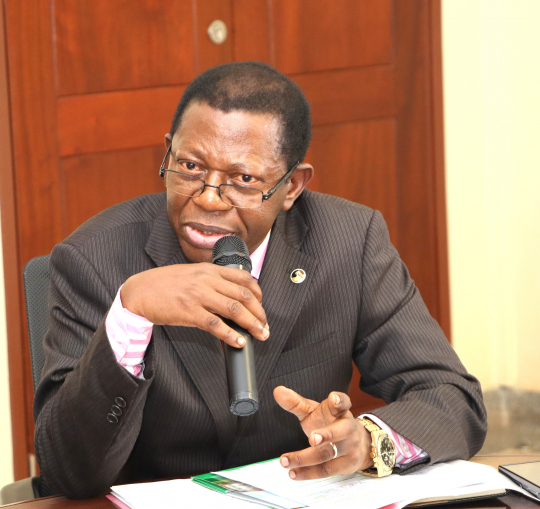
He also urged increased inclusivity in fellowships and research by involving underrepresented groups, including individuals with special needs. To ensure equitable capacity building, he urged the center to document gender data and special needs representation.
Prof. Buyinza praised the Centre’s results-based management and encouraged continued collaboration for growth.
Advisory Board Calls for Deeper Engagement
Board members praised EfD-Mak’s progress but called for stronger links to the private sector, civil society, and local development.
Julius Byaruhanga (Private Sector Foundation Uganda) urged closer collaboration with businesses, especially in energy efficiency and climate financing. “Research must inform private sector investment,” he said, suggesting joint advocacy and donor project engagement.
Onesmus Mugyenyi (civil society) stressed coordination to avoid duplication and improve impact. “Mapping stakeholders and involving practitioners in training will enhance both policy outcomes and student learning,” he noted.
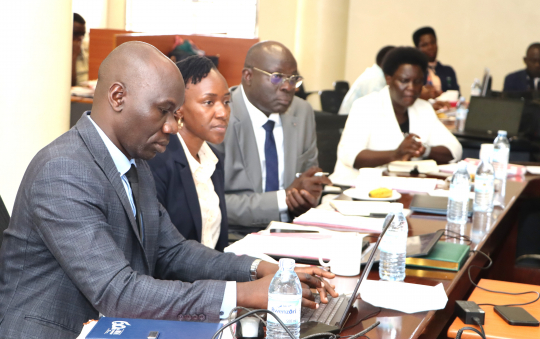
Dr. Sam Mugume (Ministry of Finance) acknowledged the Centre’s work in climate finance and called for greater integration into national macroeconomic planning. He recommended EfD-Mak position itself as a strategic partner for Africa-wide climate initiatives.
Apollo Kagwa (National Planning Authority) emphasized grassroots relevance. “Your work is excellent, but it must also serve community programs like the Parish Development Model,” he said, suggesting alumni engagement and consultancy opportunities.
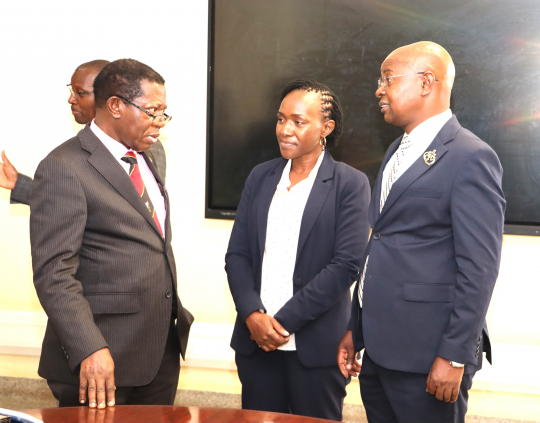
Prof. Buyinza welcomed the feedback, calling it a roadmap for scaling impact from local to global.
By Jane Anyango
Communication Officer