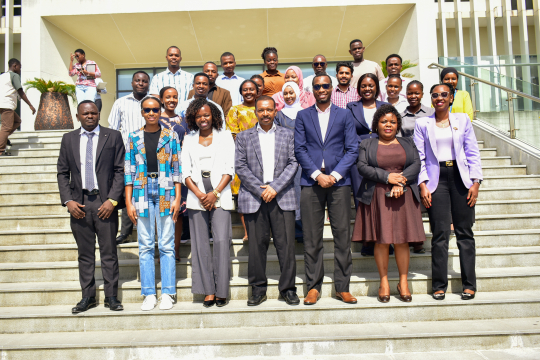
EfD Tanzania convened graduate students and early-career fellows at the University of Dar es Salaam for a one-day workshop to strengthen the link between research in environmental and resource economics and real-world policy actions.
Held in Dar es Salaam on 27th January 2026, the workshop brought together researchers, policy experts, and practitioners to discuss national environmental priorities and explore pathways for building impactful, policy-oriented careers.
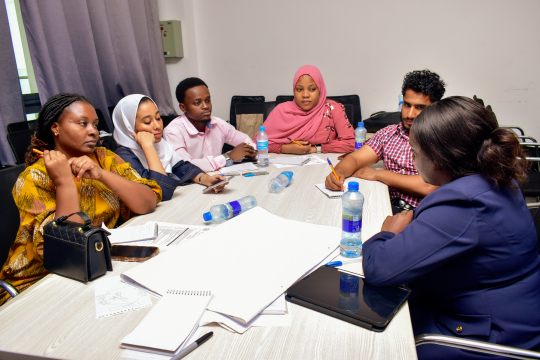
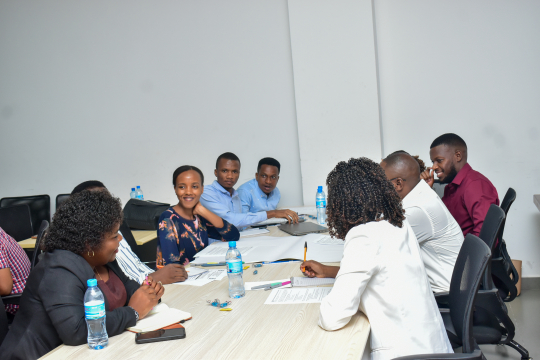
The workshop focused on key environmental and resource challenges facing Tanzania, including climate change, natural resource management, energy transitions, and sustainable development. Through plenary discussions, panel sessions, and interactive group work, participants examined how rigorous research can be translated into actionable policy insights.
Speaking during the workshop, one of the participants, Herman Abdallah, highlighted the value of the discussions in shaping policy-relevant thinking.
“The sessions helped me better understand how to frame my research questions in a way that directly responds to national policy priorities,” he said.
Mentorship strengthens early-career fellows
A key feature of the workshop was professional mentorship, where participants engaged directly with experienced researchers and practitioners. These sessions provided practical guidance on refining research ideas, engaging with policymakers, and navigating career pathways in environment and resource economics.
Another participant, Fisah Isaac, emphasized the benefits of mentorship and networking opportunities provided by the workshop.
“Interacting with senior researchers and policy experts gave me clarity on how to position my work for greater policy impact and long-term collaboration,” she noted.
Building networks for long-term policy impact
By bringing together participants from academia, government, and policy institutions, the workshop created a platform for sustained engagement and collaboration. EfD Tanzania reaffirmed its commitment to supporting young researchers in producing high-quality, policy-relevant research that contributes to informed decision-making and improved environmental outcomes in Tanzania.
Dr. Erica Mtenga, a Postdoctoral Researcher at EfD Tanzania, underscored the importance of nurturing early-career researchers to think beyond academia.

"This workshop was designed to help early-career researchers understand not only how to conduct rigorous research, but also how to communicate their findings effectively to policymakers and practitioners," she explained.
"Our goal is to support them in generating evidence that can realistically inform policy debates and development interventions in Tanzania."
Closing the workshop, Dr. Martin Chegere, Director of EfD Tanzania and EfD Senior Research Fellow, emphasized the broader mission of the initiative.
"EfD Tanzania remains committed to strengthening the research–policy interface by investing in the next generation of environmental economists," he said.
"By connecting young scholars with policymakers and practitioners, we are building a community capable of delivering research that responds to real societal and environmental challenges."
Engaging practitioners for real-world impact
The workshop also benefited from the active participation of development practitioners, including representatives from the United Nations Development Programme (UNDP). Ms. Sayuni Mbwilo from UNDP shared practical perspectives on how economic research feeds into development programming and policy design, encouraging participants to align their research with implementation realities.
From the private sector, Gerald Sanga of GKS Agribusiness Solution Company Limited highlighted the role of applied research and skills development in transforming agriculture.
"At GKS Agribusiness Solution Company Limited, we work closely with farmers as real partners," he noted.
"Our mission is to support farmers with modern technical skills—what to do, why to do it, and how to do it—so they can improve both the quality and quantity of their production, access better markets, and become part of strong networks linking producers and consumers."
By Salvatory Macha