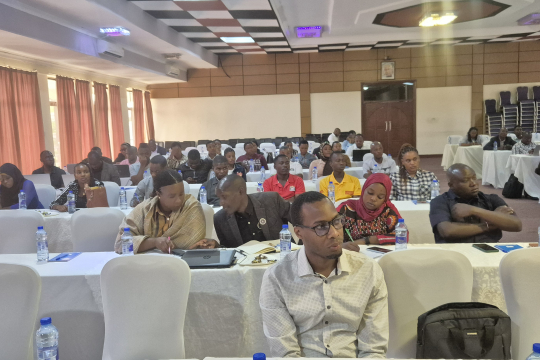
Studies by EfD Tanzania researchers contribute to policy discussions on how the government’s infrastructure investments can better support youth participation in agricultural markets and trade. The research findings were presented at a policy workshop, convening stakeholders from government, academia, the private sector, development partners, and youth-led organizations.
The workshop, held on 16 December 2025, was facilitated by Dr. Martin Chegere, Director of the EfD Centre–Tanzania and Senior Lecturer at the University of Dar es Salaam. Dr. Chegere presented findings from an assessment conducted under the Building a Better Tomorrow – Youth Initiative for Agribusiness (BBT-YIA), focusing on how public infrastructure investments can address structural barriers limiting youth engagement in agriculture.
The study shows that limited access to land, capital, skills, and markets remains a key challenge for young people, often worsened by poor rural infrastructure, high transport costs, insufficient storage facilities, and limited irrigation coverage.
Strategic infrastructure can enable youth participation
According to the EfD assessment, targeted investments in both hard infrastructure—such as roads, irrigation systems, storage facilities, and transport—and soft infrastructure, including research, extension services, financial services, and digital platforms, are critical for expanding youth inclusion across agricultural value chains.
Martin Chegere emphasized that aligning infrastructure development with youth-focused programs can significantly improve market access and economic opportunities for young agripreneurs.
Multi-stakeholder engagement to strengthen implementation
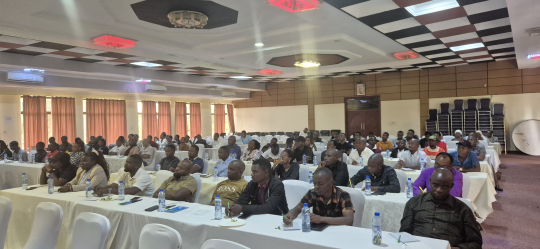
The policy workshop was jointly organized by the Ministry of Agriculture and AGRA Tanzania as part of ongoing efforts to operationalize the Building a Better Tomorrow (BBT) program. Discussions highlighted complementarities between BBT objectives and AGRA’s Youth Entrepreneurship for the Future of Food and Agriculture (YEFFA) program, which supports youth through access to skills, finance, markets, and enabling ecosystems.
Panel discussions brought together representatives from the Ministry of Industry and Trade, Tanzania Horticulture Association (TAHA), Tanzania Agricultural Research Institute (TARI), National Irrigation Commission, Tanzania Chamber of Commerce, Tanzania Civil Aviation Airports Authority, Ministry of Livestock and Fisheries, and regional agricultural offices.
The policy implications message
Participants underscored the importance of a coordinated implementation of public investments, improved dissemination of information in Kiswahili, inclusive targeting of youth, and the expansion of irrigation and modern technologies to underserved areas.
Overall, the workshop reinforced the relevance of EfD research in informing evidence-based policies that link infrastructure development with inclusive and sustainable agricultural growth. The findings provide actionable insights for policymakers seeking to ensure that infrastructure investments translate into tangible opportunities for young people.
By: Salvatory Macha