
Enugu state in Nigeria has been grappling with water scarcity, largely due to its challenging topography and high coal deposits, particularly in urban areas. As a coping strategy, many residents have been forced to ration water use, often below their daily needs. However, new research by EfD Nigeria indicates that urban households in the state are willing to pay for water, provided it is reliably available.
The findings are presented in a study titled Coping with Water Scarcity: Preferences and Households’ Willingness to Pay, which was one of three research results presented to policymakers at EfD Nigeria’s Policy Day event held on December 2, 2025.
Study recommends PPP model, metering and cluster supply of water
Presenting its recommendations, the study called for a geographic mapping of Enugu State to identify nearby water sources that can be efficiently distributed to residents in clusters. It also advised that existing dams should be leveraged to supply water to neighboring local government areas.
To address infrastructure and cost challenges, the research urged the Enugu state government to adopt a public-private partnership (PPP) model for water supply networks across the state. It further proposed the introduction of a metering system that would enable households to pay according to actual water consumption, thereby promoting efficiency and sustainability.
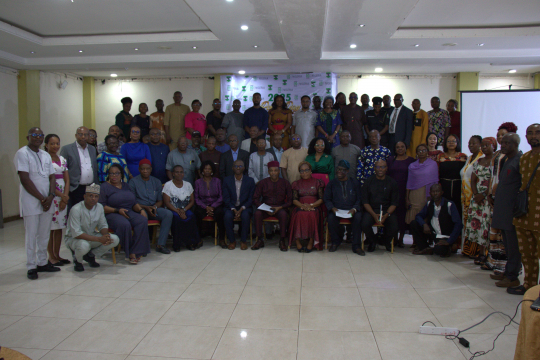
Government says recommendations is valuable for policy action
Reacting to the findings, the permanent secretary of the Enugu state Ministry of Water Resources, Ada-John Nwoye, said the study has provided valuable insights for policy action.
“Enugu state government is committed to implementing practical solutions that will improve water supply in the state,” said Ada John Nwoye.
In addition to the water scarcity research, EfD Nigeria also presented studies on the Gender-differentiated impacts of climate-smart agriculture among cassava farmers, as well as the Effects of armed banditry on agricultural productivity across Nigeria.
Climate-smart agriculture and the effects of armed banditry on agriculture were discussed
Speaking at the event, the Deputy Vice-Chancellor of the University of Nigeria, Enugu Campus, Professor. Josephat Onwumere noted that climate change and insecurity are compounding threats to Nigeria’s food systems.
“Climate change has disrupted rainfall patterns, and banditry continues to displace farmers and destroy farmlands. The result is a growing threat to food security and social stability,” said Josephat Onwumere, who represented the Vice-Chancellor of the University of Nigeria.
He said that the University of Nigeria is committed to advancing policy-relevant research, adding that research must lead the way in finding solutions to the intertwined challenges of water scarcity, climate change, and insecurity.
Discussions aim to bridge the gap between research and policy
The Director of EfD Nigeria, Professor Nnaemeka Chukwuone, explained that the Policy Day was designed to bridge the gap between research and policymaking. He disclosed that the water scarcity study was conducted in collaboration with the Enugu state Ministry of Water Resources, while the climate-smart agriculture study has already been accepted for publication in a top-tier journal. According to him, the research on armed banditry further revealed wide-ranging gender impacts in affected communities.
The event attracted stakeholders from the Federal Ministries of Environment, Water Resources, and Agriculture, the National Council on Climate Change, security agencies, as well as state ministries from Enugu and Anambra states.